2026-11-24
Facial Spot Removal and Melasma Laser Review: Why You Should Manage It Now
Explains why melasma and sunspots need different laser approaches, how Picotoning is tailored to pigment type and depth, and why winter dryness and sagging call for a personalized plan.
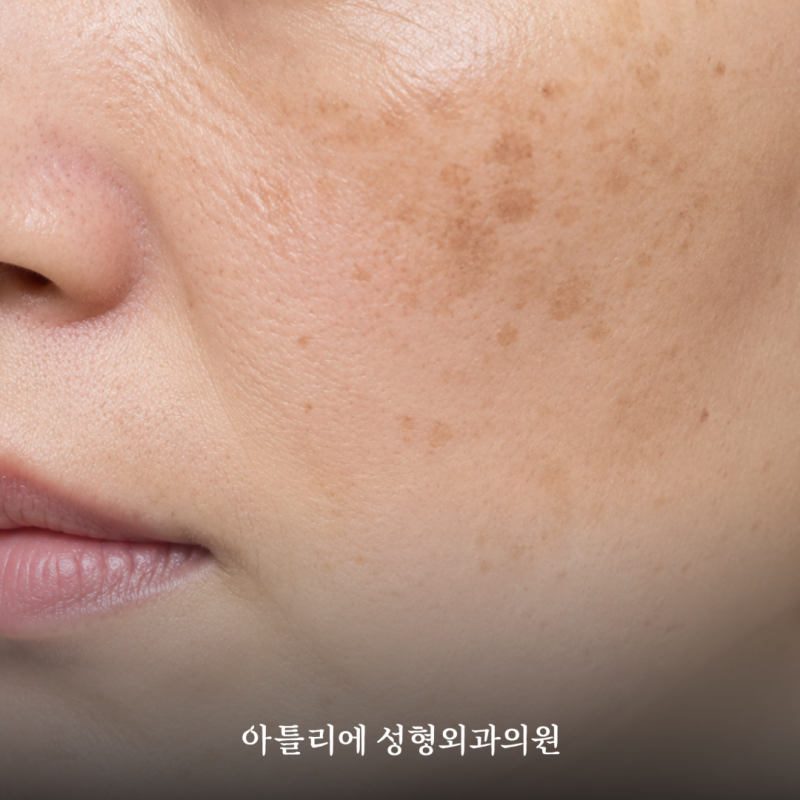
Facial Spot Removal and Melasma Laser Review: Why You Should Manage It Now

Once the cold wind starts to blow, doesn't your face in the mirror look unusually dull and rough?
When you enjoy hiking, golf, or other outdoor activities in autumn, you may spend more time exposed to UV rays than you realize.
Because the sun feels less intense than in summer, it's easy to let your guard down on sun protection.
But UV damage that has built up over time can show up as melasma and sunspots.

Add dry winter air and indoor heating, and your skin becomes even more sensitive. Makeup starts to lift and look patchy.
If fine lines stand out, or your cheeks and jawline look more sagging than before, it's hard to chalk it up to just a seasonal change.
The first step in winter skin care isn't choosing a procedure right away. It's accurately checking what changes have taken place in your skin.

Melasma and sunspots can't all be treated with the same laser.
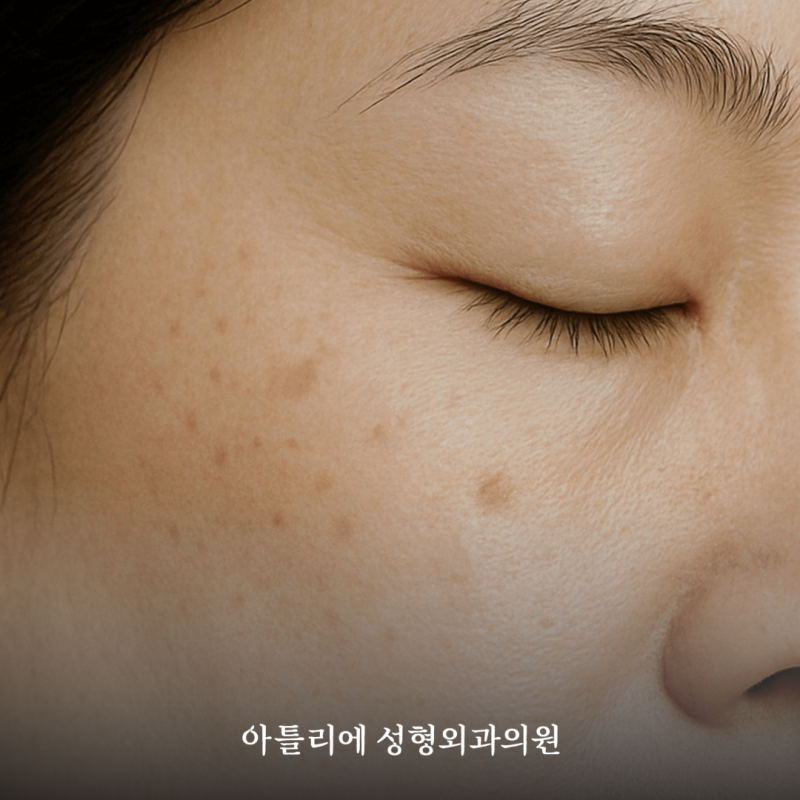
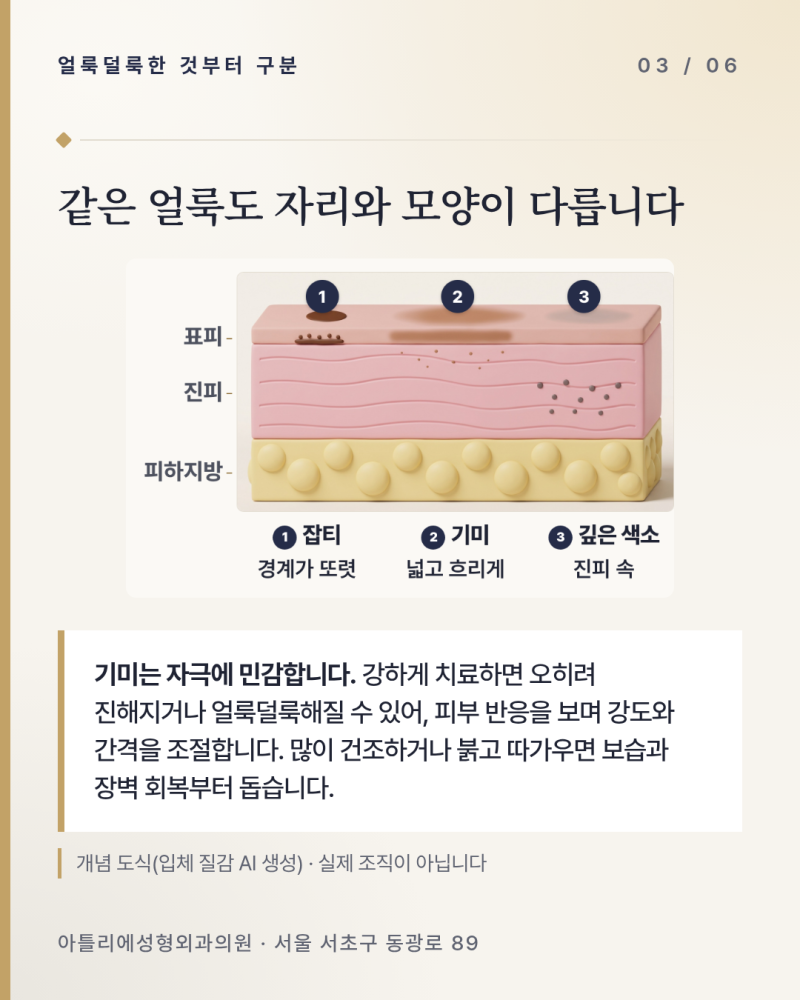
Pigmentation that appears as blotches on the face may look similar on the surface, but the causes and depth differ.
Melasma tends to spread over a relatively wide area and is sensitive to external stimuli.
In contrast, sun spots and nevus of Ota tend to have relatively distinct borders.
The treatment approach also differs depending on whether the pigment sits in the epidermis or the dermis.
If you're considering facial spot removal, rather than simply focusing on getting rid of the pigment, first determine what type of pigmentation you have.
In particular, when melasma and sunspots appear together, you may need a different approach for each area.
At Atelier Plastic Surgery Clinic, Picotoning first checks the type and depth of the pigmentation, then applies 1064nm and 532nm wavelengths accordingly.
Treatment is generally done 5 to 10 times at 2- to 4-week intervals. For pigmentation that is sensitive to stimulation, such as melasma, treatment starts at a low energy level
and the intensity is adjusted while monitoring how the skin responds.
When you look up melasma laser reviews, you'll see plenty of questions about the number of sessions and energy settings.
What matters most is creating a plan that fits your own pigmentation, rather than simply following someone else's treatment course and results.
In particular, with melasma, repeatedly using high energy in a rush to clear it can actually make the pigment darker or cause it to recur.
Therefore, rather than treating aggressively all at once, it's important to take a step-by-step approach that suits your skin's condition.
Winter dryness and loss of elasticity need to be managed together.
In winter, low humidity and indoor heating can easily leave your skin short on moisture.
Your skin may feel tighter and rougher than usual, and fine lines may look more noticeable.
In this case, it's best to look beyond simply switching moisturizers and also examine skin thickness, elasticity, and the causes of sagging.
At Atelier Plastic Surgery Clinic, we consider the following procedures based on each person's skin condition.
Ulthera: An ultrasound lifting treatment that delivers energy at depths selected for each area while checking the structures beneath the skin with ultrasound imaging.
Pasela: A lifting treatment that uses radiofrequency energy to help improve skin and tissue elasticity.
Skin boosters: Skin-improvement treatments in which the ingredients and injection depth are determined based on skin dryness, thickness, and overall condition.
The key point here is that the same lifting treatment isn't suitable for every face.
Pushing high energy into a face that lacks volume, or repeating treatments without considering what's causing the sagging,
can lead to results that fall short of your expectations.
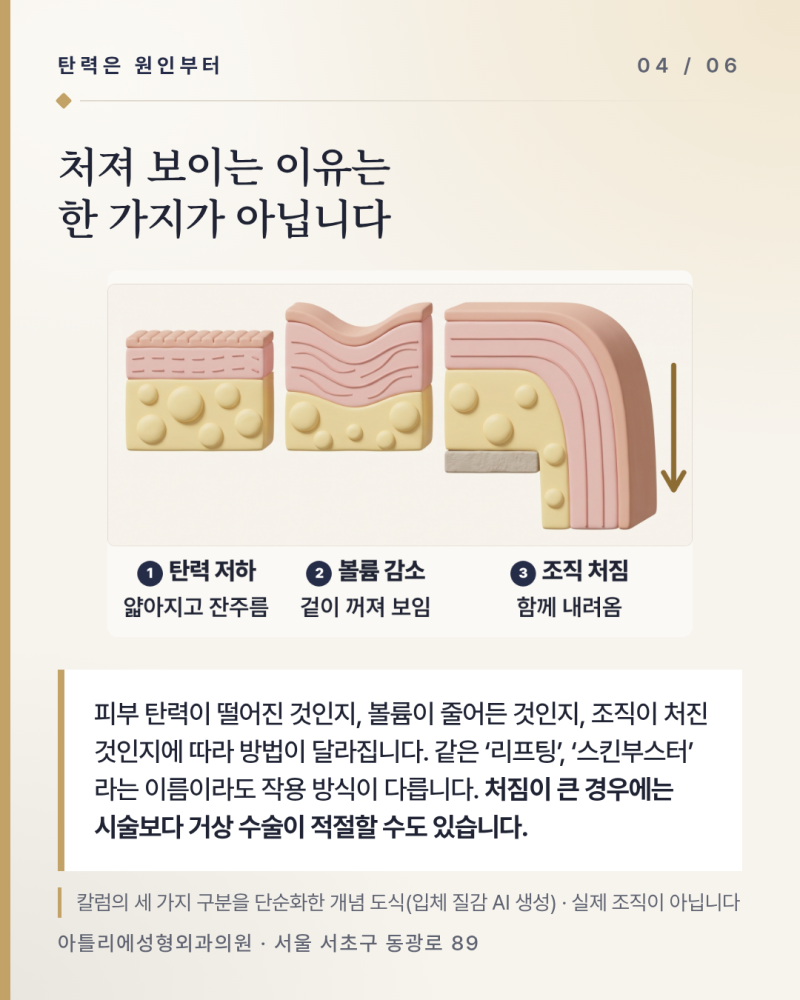
Skin thickness, fat volume, and the degree of sagging should be comprehensively assessed before choosing the right method.
In some cases, lifting procedures alone may not be enough to improve the result.
Just because your cheeks and jawline look sagging doesn't mean Ulthera or radiofrequency treatment is always the right answer.
Cases where the skin itself has lost elasticity and cases where the tissue has drooped downward call for different approaches.
If you gently lift your skin with your hands and notice excess skin remaining, non-surgical lifting alone may not deliver the results you're hoping for.
In such cases, rather than repeating treatments, it's worth considering whether a surgical option, such as a thread lift or facelift, is more suitable.

If you have a year-end gathering coming up, consider scheduling your consultation earlier.
Year-end and the start of the new year bring many get-togethers with people you haven't seen in a while.
Rather than rushing into treatment right before an important event, it's better to plan ahead and allow enough recovery time.
Picotoning involves checking pigment changes over several sessions, while Ulthera results may gradually appear over about 2 to 3 months rather than right after treatment.
Skin boosters can cause injection marks, swelling, or bruising afterward, so your schedule needs to be planned carefully.
Facial spot removal works the same way: the number of treatments needed varies with the type and depth of pigmentation, so it's best to start with plenty of time to spare.
Aftercare is just as important, since UV rays don't disappear simply because it's winter.
Wear sunscreen consistently when you go outside, and after washing your face, apply enough moisturizer to care for your skin barrier.

Winter skin care tailored to your skin, at Atelier Plastic Surgery Clinic
Atelier Plastic Surgery Clinic, led by Director Dr. Ko Ju-young (board-certified plastic surgeon with a Ph.D. in Medicine), assesses skin condition, pigment depth, dryness, loss of elasticity, and the degree of sagging
comprehensively to provide personalized care guidance.
If you're comparing clinics while reading melasma laser reviews, don't just look at session counts or equipment. Also check who personally examines your skin
and what criteria they use to plan your treatment.
Rather than recommending as many procedures as possible, the focus should be on what treatment your skin needs right now, whether non-surgical options are enough,
or whether you've reached a stage that calls for surgery. Making that distinction is what matters most.
Plans should account for your past treatment history, recovery time, and lifestyle. You're also welcome to take time to think it over rather than deciding on the day of your consultation.
This winter, rather than blindly following whatever treatments others recommend, start by looking at what your skin truly needs right now.
A healthy, natural-looking appearance begins with an accurate diagnosis and consistent care, not with excessive procedures.
#FaceSpotRemoval #MelasmaLaserReview
Frequently Asked Questions
Can melasma and sunspots be treated with the same laser?
No, melasma and sunspots cannot be treated with the same laser. Melasma spreads over a wide area and is sensitive to external stimuli, while sun spots and nevus of Ota tend to have more distinct borders. The treatment approach also depends on whether the pigment is in the epidermis or the dermis.
How many Picotoning sessions are usually needed?
Treatment is typically performed 5 to 10 times at 2- to 4-week intervals. However, the number of sessions depends on the type and depth of pigmentation, so it's important to first assess each person's condition. For pigmentation that is sensitive to stimulation, such as melasma, treatment starts at a low energy level and the intensity is adjusted based on how the skin responds.
Is it okay to repeatedly use high energy to clear melasma quickly?
No. Repeatedly using high energy can actually make the pigment darker or cause it to recur. That's why a step-by-step approach suited to your skin's condition matters more than aggressive treatment all at once.
Will Ulthera or radiofrequency treatment improve sagging skin?
Not necessarily. The same lifting treatment doesn't suit every face, and cases of reduced skin elasticity differ from cases where the tissue has drooped. If you notice excess skin remaining when you gently lift your skin with your hands, surgical options such as thread lifts or facelifts should also be considered.
Do Ulthera results appear right after treatment?
No. Ulthera results may gradually appear over about 2 to 3 months rather than immediately after treatment. If you have an important event coming up, such as a year-end gathering, it's best to plan ahead and allow enough recovery time rather than rushing into a procedure.
Should I wear sunscreen in winter too?
Yes. UV rays don't disappear just because it's winter, so it's best to wear sunscreen consistently when you go outside. Even if the sun feels weaker than in summer, accumulated UV exposure can show up as melasma and sunspots.